
March Blog: A Legislative Session Focused on Building Momentum for 2027
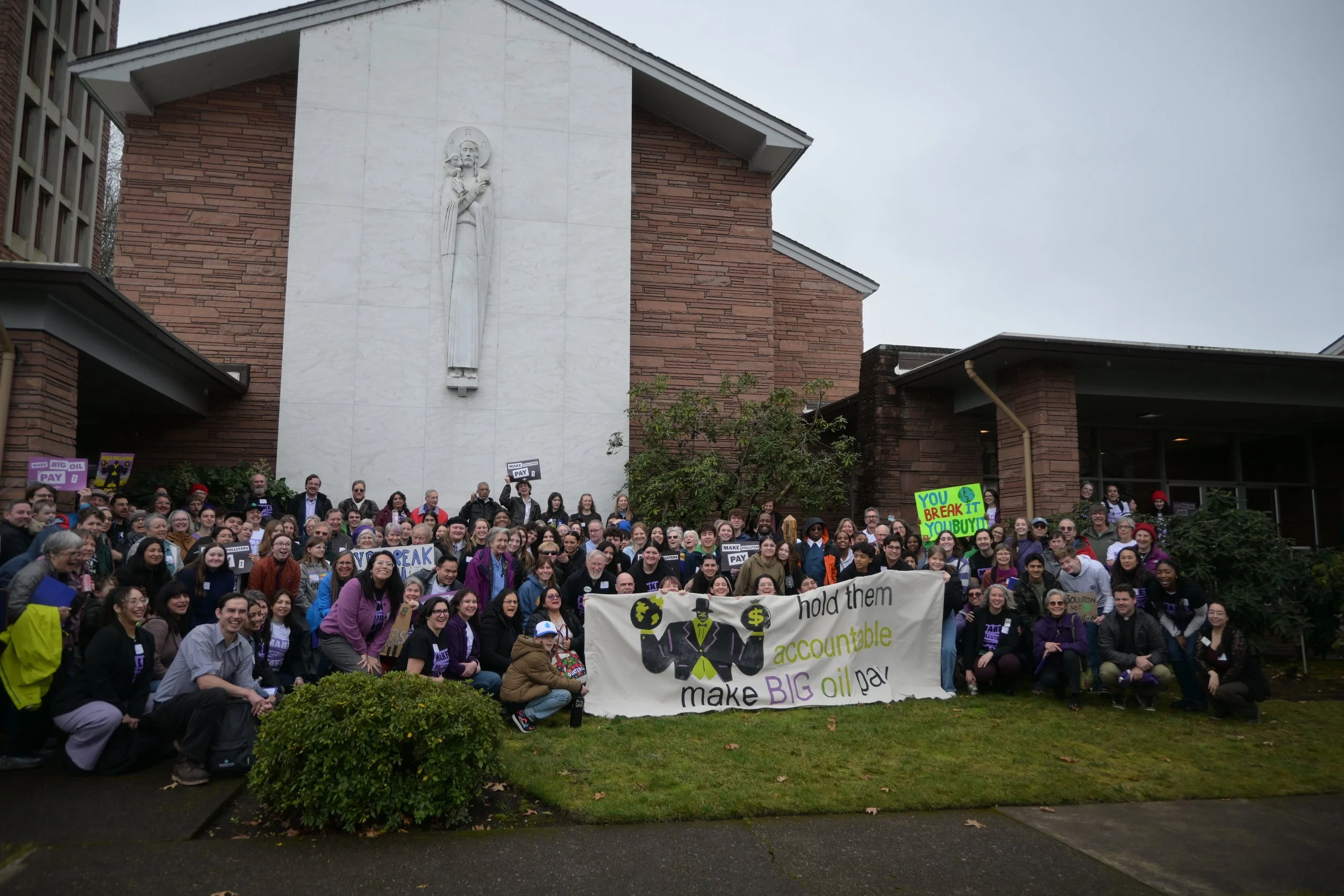
Over 200 people gathered for the Make Polluters Pay Advocacy Day in Salem in early February.
With just 35 days to address many pressing issues impacting Oregonians, the 2026 short legislative session came and went quickly. From the outset, we knew that many of our campaigns were laying the groundwork for 2027, as Oregon’s budget constraints would not be resolved in such a short window.
The Good:
We Kept Oregon Nuclear-Free (HB 4046)...for now. Pro-nuclear forces and their big-tech backers worked to advance a “study” on the benefits of building new nuclear power reactors in Oregon. The study would have left affected communities out of the process, been funded by private and federal funding, and would have thrown out nuclear safeguards. HB 4046 was successfully delayed, but big tech will continue to push nuclear as a Trojan horse to address Oregon’s energy affordability crisis while really pursuing more power for their data centers.
Important parts of the Immigrant Justice Package passed and await the Governor’s signature. SB 1587 will prevent Oregon’s data from falling into the hands of federal immigration enforcement through third-party data brokers. Anti-Discrimination Protections (HB 4111) protects immigrants from discrimination in court proceedings based on immigration status. Protect Your Door (HB 4114) allows Oregonians to seek civil damages when federal or out-of state agents unlawfully enter private property. Law Enforcement Visibility and Accountability Act (HB 4138) requires law enforcement officers operating in Oregon to visibly identify themselves and prohibits face coverings. This strengthens public trust by ensuring that all law enforcement actions in Oregon are more transparent, visible, and accountable.
Community Resilience Hubs are permanently established in the Oregon Department of Emergency Management (HB 4121). Community Resilience Hubs can serve many purposes, including providing heating and cooling stations for extreme weather and shelter during natural disasters. These important emergency response stations are often underfunded. By making them a permanent designation in the Oregon Department of Emergency Management, new funding opportunities can arise.
A technical fix has been added to the FAIR Energy Act (HB 4025) that prevents increases in water utility bills during the summer months, when bills are at their highest.
What Needs to be Addressed in 2027
The Climate Resilience Superfund Bill (SB 1541) was delayed in the Ways and Means Committee. This bill would secure billions of dollars for climate resilience in Oregon by requiring the largest fossil fuel companies to compensate the state for past climate change damages from 1995 through 2024.
Verde joined the Make Polluters Pay campaign to advocate for the passage of the Climate Resilience Superfund Bill. The funds generated by its passage would support wildfire management and the communities most impacted by climate change. More than 200 wildfire survivors, faith leaders, firefighters, young people, heat wave survivors, local elected officials, heating and cooling professionals, taxpayers, and community members show up to the Make Polluters Pay advocacy day.
Both of the Move Oregon Forward campaign’s priority bills focused on better assessment (SB 1542 - Measure What We Drive) and accountability (SB 1543 - Guardrails for Good Governance) failed to pass.
There was even more fallout from not passing a transportation package in 2025, as lawmakers redirected $50 million from critical programs for safety and other transportation programs to cover the budget deficit. This includes cuts to Safe Routes to School ($17 million) and Oregon Community Paths ($8 million), effectively cutting 60% the state’s funding for building sidewalks and crosswalks.
The Bad:
A bill passed allowing corporations to apply for an expedited Department of Environmental Quality permit (HB 4102). If the applications are accepted, the company would pay for a third-party permit writer. Privatizing and expediting the DEQ permitting process puts public health at risk.
There is a lot that needs to be done in 2027. We need lawmakers to Move Oregon Forward with a transportation package that improves safety, is affordable, accountable, and climate forward. We need to Make Polluters Pay for the wildfire preparedness and climate resilience that their polluting made necessary.
Thank you to each of you who wrote your legislator, submitted testimony, attended an advocacy day, or funded our work.