
April Blog: The Portland Harbor Superfund Site: A Riverfront We Love—and a Legacy We Must Address
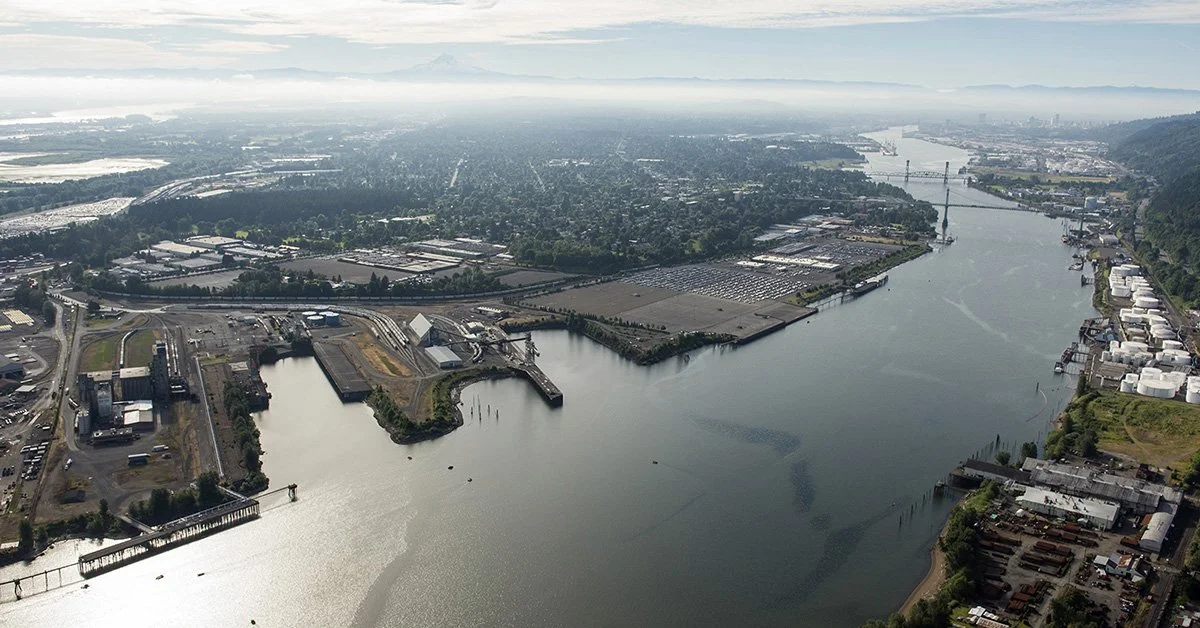
The Willamette River; one of Portland’s most cherished spaces. From biking along the waterfront to paddling from shore to shore, people everywhere have enjoyed this scenic feature for decades. However, beneath the beauty lies a lesser-known reality: this stretch of the river is also one of the most contaminated environmental sites in the nation.
Introducing the Portland Harbor Superfund Site.
In a nutshell, the Portland Harbor Superfund Site is the result of decades of careless industrial activity along a 10 mile stretch of the Willamette river, stretching from from the Broadway Bridge in Portland to the southern tip of Sauvie Island, near the confluence with the Columbia River. For years, this area made for a very convenient place for businesses to produce and quickly ship out goods.
But that convenience came at a cost.
Industrial waste and pollution were discharged directly into the river over time, settling into the riverbed as sediment. While only 7% of this sediment is considered hazardous or toxic, that portion still poses serious risk to water quality, wildlife, and human health. Even a small percentage of contamination can have lasting environmental impacts.
In December of 2000, the site was added to the Environmental Protection Agency’s National Priorities list. This list is reserved for the most contaminated sites in the country that will require a long-term cleanup plan. The stakes are high, and addressing the clean-up is essential for both environmental and public health.
So, who is responsible for this clean-up?
Luckily, one of the key principles of the EPA’s clean-up plan requires parties responsible for the pollution to contribute their fair share to the cleanup cost. These responsible parties include a huge number of organizations and corporations that have operated along the river over the years.
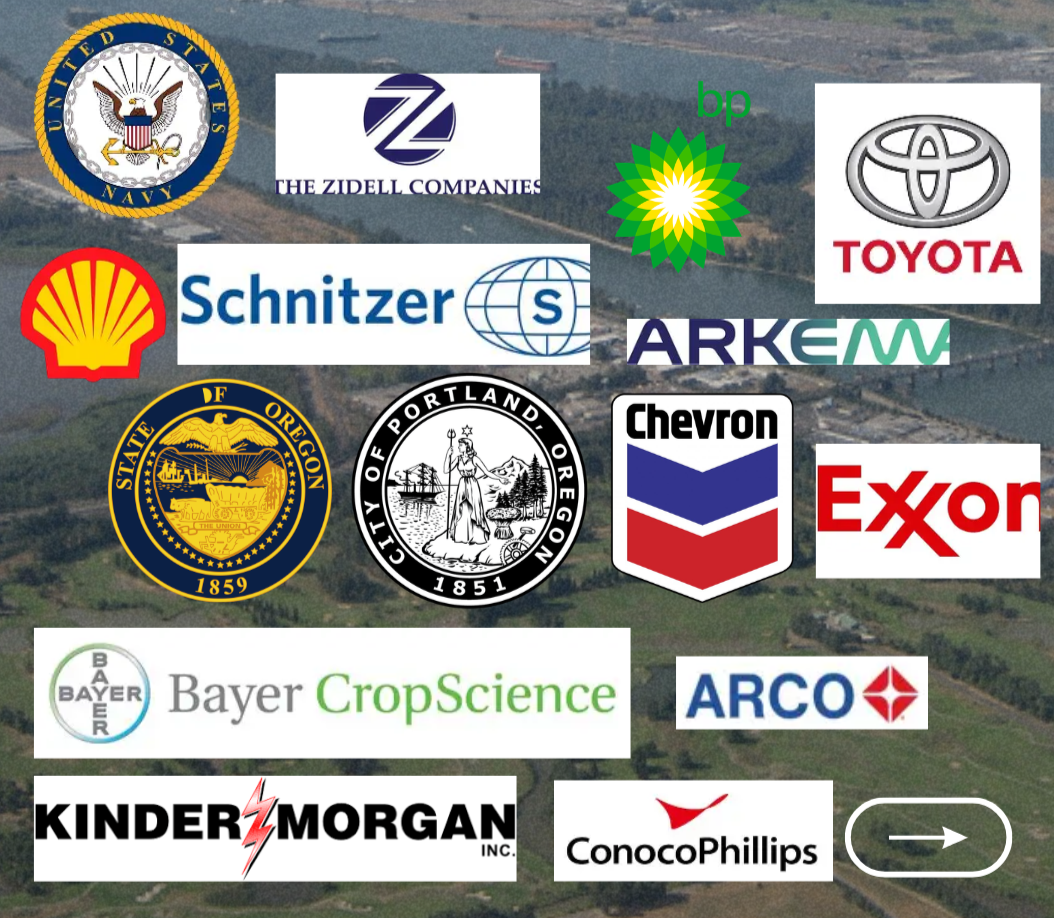
This image displays a handful of the responsible parties listed by the Environmental Protection Agency.
Unfortunately for Oregonians, the City of Portland is also on the hook as a responsible party, meaning that local systems and residents are indirectly tied to the financial side of the cleanup.
Let’s talk about the cleanup plan and its challenges.
The current plan involves removing about 3 million cubic yards of sediment from the riverbed, and transporting it to communities located dozens or even hundreds of miles away in the Columbia River Gorge. This approach comes with significant tradeoffs”
Cost. The total clean up is projected to reach up to $6 billion dollars. With a B.
Transportation impact: Nearly 200,000 truckloads would be required over several years. Causing an insurmountable amount of diesel emissions and carbon output.
Budget allocation: Over 70% of the projected costs may go to transportation alone, rather than restoring the river itself.
These factors raise important questions about efficiency, environmental impact, and long eterm value.
So, how will this affect Portland Residents?
For most, the Superfund cleanup may feel distant – but it is already showing up in a very real way: utility bills.
Portland Residents who receive water bills may notice a Superfund cleanup surcharge (#5 below), which has been collected since around 2010. By 2019, about $12 million had already been gathered, with millions more added since. Meanwhile, the average monthly water bill in portland is $81, and expected to rise by 7-8% in the coming years.
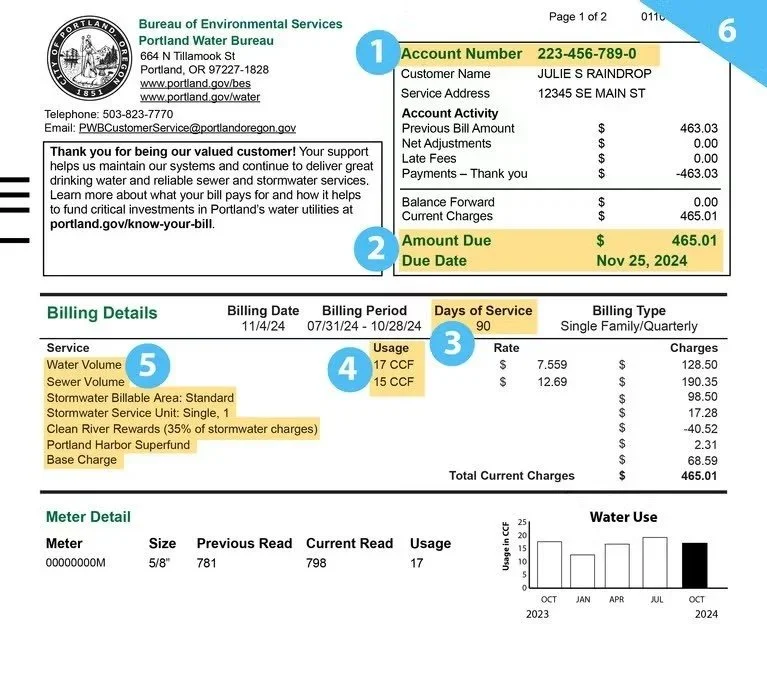
Of course, these increases are not only due to the superfund, but the superfund is certainly part of the equation – particularly because the city is on the hook to help cover cleanup expenses.
Now, this situation raises ongoing concerns among community members. For example, how are these collected funds being used? Why are residents contributing financially when they did not cause the pollution? Are there more cost-effective or environmentally responsible ways to go about this clean up method? While the city is working to use non-ratepayer funds where possible, the long-term financial burden remains unclear.
Community awareness and engagement are becoming increasingly important as decisions about this cleanup are being finalized. It is vital that the community calls for
Clear and updated cost estimates
Transparency in how funds are spent
Cleanup strategies that minimize both environmental harm and financial strain
Exploration of local sediment management options
The Willamette river is central to Portland’s identity. It is a place of connection with natural beauty, and a reminder of the long-term consequences of unchecked industrial growth.
As the process continues, one thing is clear – what happens next will affect not just the river, but everyone who lives alongside it.